
Soccer League Levels: A Player Guide
Soccer league levels are not a single ladder with one step from rec soccer to the pros. In the United States, U.S. Soccer sanctions three professional divisions. Leagues below that line can still be national, demanding, and useful, but they do not carry an official division number. A player who treats every "semi-pro" label as the same level will pick the wrong room.
This guide explains how those levels differ in competition, weekly commitment, and the pathway they open. It is written for ambitious amateur and pre-professional players in Dallas-Fort Worth who want a plain comparison before they talk to a club. If you already know you want one named competition, start with our league levels guide after you finish the comparison here.
What soccer league levels actually mean
A level is a description of the competition a team is allowed to enter, not a grade of the player wearing the shirt. U.S. Soccer, the national federation, sanctions professional leagues in three divisions. The U.S. soccer league system does not tie those divisions together with promotion and relegation the way many countries do. A club stays in the league it joins unless that league or the federation changes its status.
That structure surprises players who grew up watching European tables. Finishing first in an amateur conference does not automatically move the team into a professional division the next season. Moving up usually means a new contract, a new tryout, or a new club, not a trophy that promotes the roster.
Below the three professional divisions, U.S. Soccer does not assign an official division number. National amateur and pro-development leagues still matter. They organize seasons, playoffs, and, for affiliated clubs, a route into U.S. Open Cup qualifying. They are simply not "Division IV" on a federation chart, even when people use that phrase in conversation.
Use three questions when someone names a level:
- Who sanctions it?
A professional division, an amateur national league, a regional adult league, or a rec association.
- What does a normal week cost in time?
One match, or training plus travel plus film.
- What does the season lead to?
A local cup, a national playoff, a college path, or a professional trial.
Foro Soccer Club, founded in 2019 in Dallas, competes in the UPSL, the APSL, and The League for Clubs. Those are national amateur and pro-development competitions, not the three professional divisions. The club's record is a way to judge the standard inside that band: 10 conference championships. The 2021 UPSL national championship, four national-final appearances, and wins over professional clubs in the Lamar Hunt U.S. Open Cup.
How the professional divisions differ
The top of the men's outdoor game is the part U.S. Soccer numbers. As of the 2026 reading of the league system, Major League Soccer is the sanctioned Division I league. The USL Championship is the sanctioned Division II league. Division III includes MLS Next Pro and USL League One. USL has also said it plans a new Division I league, USL Premier, for 2028, with promotion and relegation inside its own structure. That plan is not the system players enter this season.
Professional divisions differ from everything underneath in three practical ways.
The club is a full-time operation. Rosters, technical staff, and match weeks are built around the league schedule. A player is not fitting training around a separate full-time job in the same way an amateur roster does.
The contract is the relationship. Selection, pay, housing, and playing time are employment questions. An open evaluation at an amateur club is a different conversation from a professional trial.
The level is sanctioned, not self-described. A team cannot rename itself Division II. The federation sanctions the league. Individual clubs then earn their place inside that league's own rules.
Women's professional soccer has its own top leagues, including the National Women's Soccer League. This article stays with the men's pathway Foro SC actually plays, because mixing the two pyramids makes the level chart less useful.
If the goal is a professional contract, read how to become a professional soccer player as the career piece. The levels chart below only shows where that contract sits relative to amateur competition.
Where amateur and pro-development leagues sit
Most competitive adults in Dallas-Fort Worth are choosing inside the band under the professional divisions. That band is wide. A Sunday rec league and a national pro-development club can both be called "adult soccer" and share almost nothing else.
The United Premier Soccer League describes itself as a pro-development league on the fourth tier of the U.S. pyramid, just below the three professional tiers. It is a national league of independently owned clubs, with spring and fall seasons. UPSL clubs can enter U.S. Open Cup qualifying through the league's federation affiliation. That is a level description from the league itself, not an official U.S. Soccer division number.
Other national amateur leagues sit in the same broad band and still differ from each other. The National Premier Soccer League and USL League Two are widely treated as higher national amateur competitions, with Open Cup access tied to their status. The League for Clubs is its own national amateur competition with its own format. The APSL is another competition Foro SC actually enters. None of those names should be collapsed into one row on your personal chart.
A useful split for a player sounds like this:
- Recreational adult leagues
organize matches. Training is optional or absent. The level is social even when the game is competitive for an hour.
- Regional competitive leagues
add standings, discipline, and a higher match standard. Travel stays local. The pathway usually ends at that league.
- National amateur and pro-development leagues
add conferences, playoffs, and a public standard other clubs recognize. Training is part of the week, not a bonus.
- Professional divisions
add federation sanctioning, full-time operations, and contracts.
Foro SC lives in the third group. Year-round team training in Irving and Plano, free evaluations, and premier-team competition are how the club prepares players for that standard. FPA Performance sessions and pro fitness training through EXOS are optional add-ons, not a requirement to be on a team. The live Foro SC page does not print a current membership fee, so confirm cost with the club rather than assuming an old number.
Our UPSL player guide covers that league's structure. The UPSL, APSL, and NPSL comparison is the piece to use when you are choosing among those three names. This article stays one step above those pages: which band of the pyramid you are actually entering.
Soccer league levels compared
Use the table as a map, not a ranking of every club inside a row. Two teams in the same league can train very differently. The row tells you the kind of competition. The club tells you the week you will actually live.
Level | Who sets the standard | Typical week | What progress looks like |
Recreational adult. | Local league or parks program. | One match. Little required training. | Stay active and play with a group. |
Regional competitive. | State or metro adult league. | Match plus light training. | Better opponents inside your city. |
National amateur and pro-development. | National league, often federation-affiliated. | Multiple training days, travel, and film. | Conference titles, national playoffs, and Open Cup qualifying. |
Professional Division III. | U.S. Soccer sanction of the league. | Full-time club environment. | A professional contract and a league season. |
Professional Division II and I. | U.S. Soccer sanction of the league. | Full-time play, with higher roster and travel demands. | Top domestic professional soccer. |
Read down the "what progress looks like" column before you read the league's nickname. A conference championship in a national amateur league is a real result. It is not the same event as winning a professional division. Foro SC's Open Cup wins over professional clubs show that the gap can be crossed on a single night. They do not turn the amateur league into a professional division.
How commitment changes as the level rises
Players usually feel the level in the week, not in the league logo. A higher soccer league level asks for more of the same things: availability, recovery, and attention to detail.
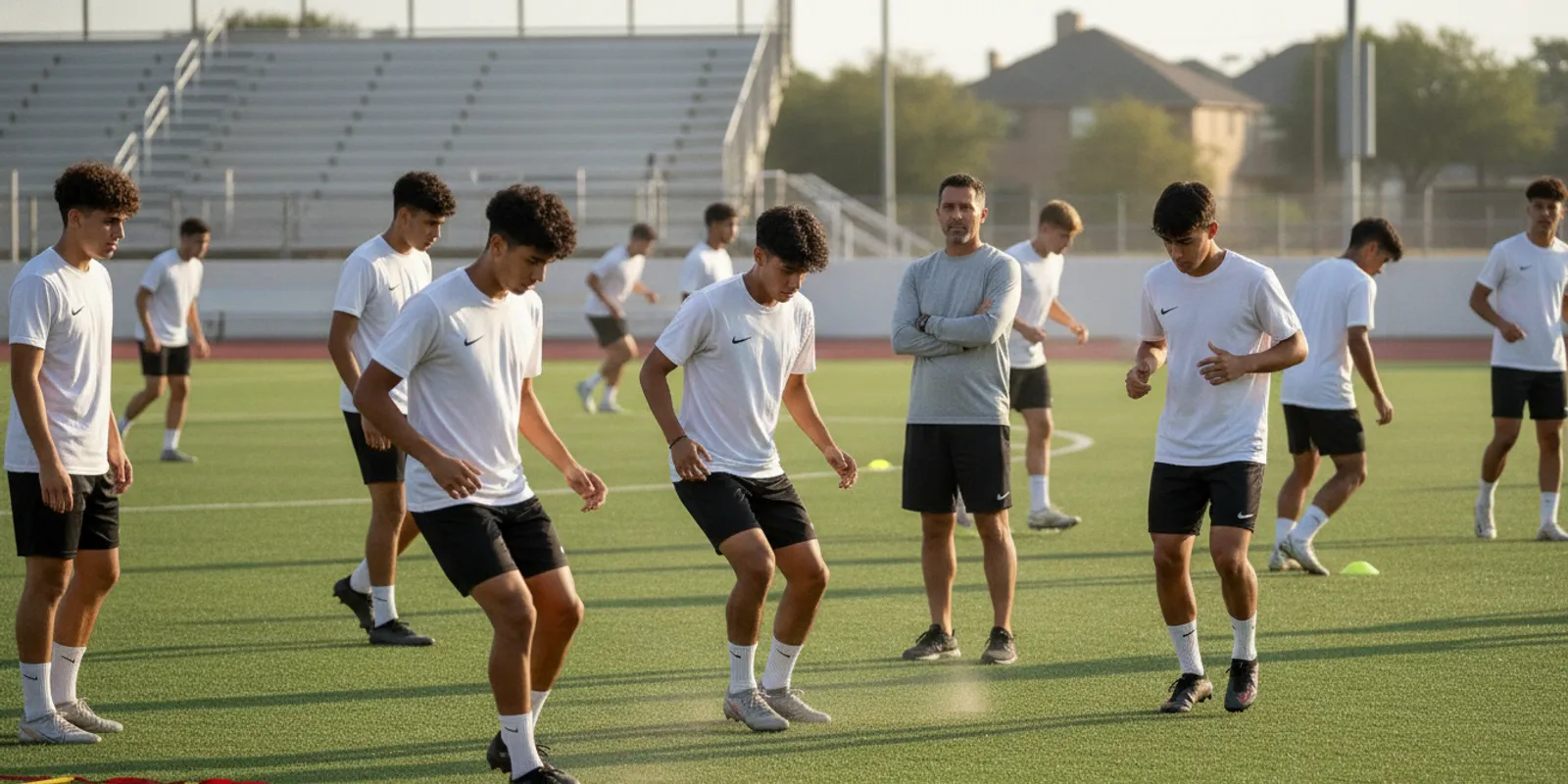
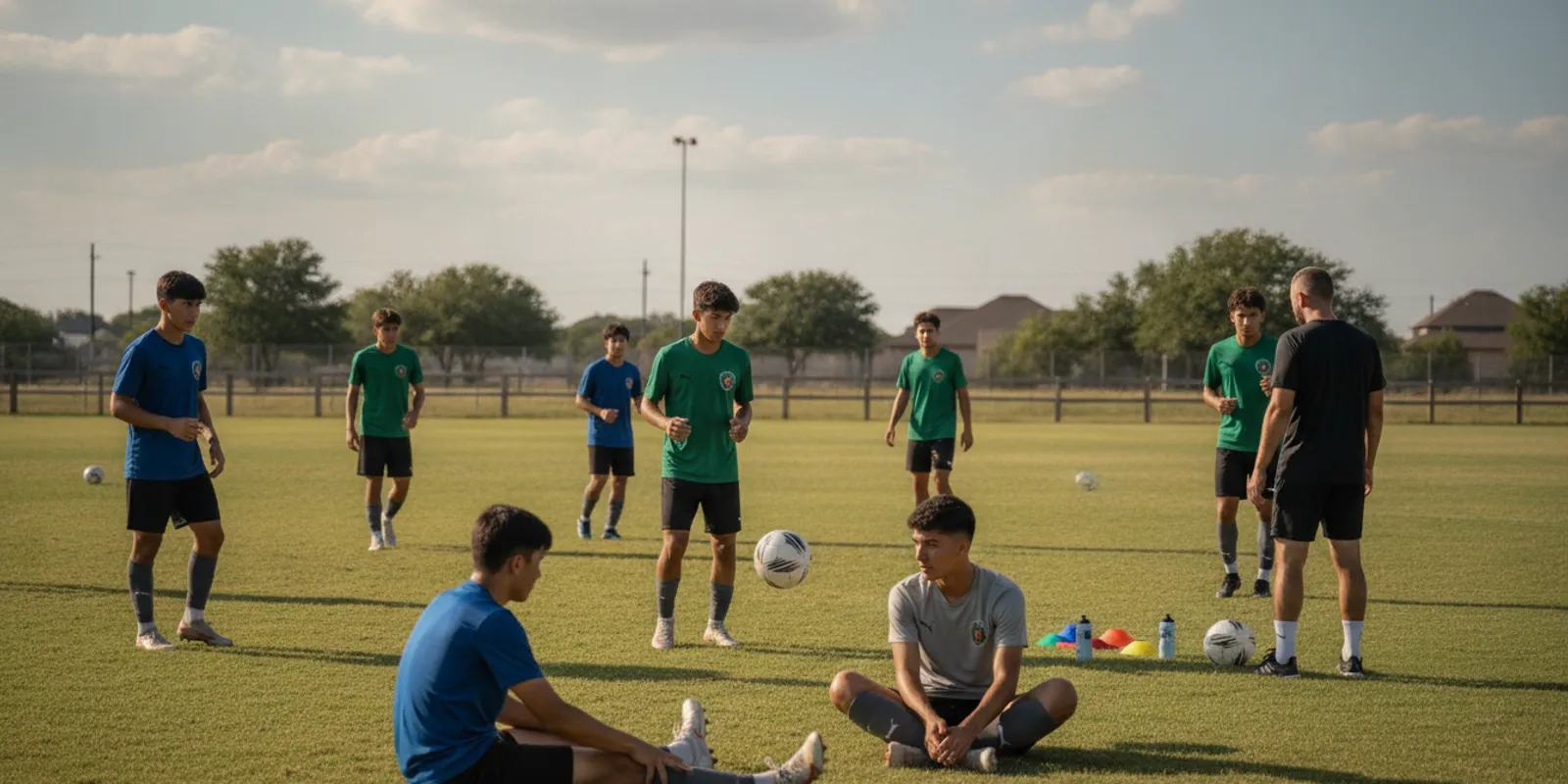
Training stops being optional. At a national amateur club, missing sessions changes your place on the roster. Foro SC's pathway is built around year-round team training, not a match-only schedule. Premier teams expect players who can hold a tactical idea for 90 minutes.
Travel becomes part of the sport. Conference and national play means evenings and weekends outside your home field. A player comparing a Dallas rec team with a national roster should price the miles, not just the kit.
The roster is selected. Free evaluations and tryouts exist so the club can see whether the level fits. They are not a promise of a spot. Foro SC offers free evaluations for players who want to test that fit in the Dallas-Fort Worth area.
Recovery and outside load matter more. Many national-league players also work or study. The level is sustainable only if sleep, strength work, and match congestion are planned. Optional fitness support, such as EXOS or FPA Performance, can sit beside team training. It does not replace the team's own sessions.
A practical test: write down the next four weeks. If you can protect two or more team sessions plus a match, a national amateur level is plausible. If you can protect one match and nothing else, a regional or rec level will be a better season. Guessing "semi-pro" without that calendar is how players end up in the wrong locker room.
How to choose a level without skipping a step
Choosing a level is a fit decision. Work through it in order.
- Name the result you want in 12 months.
A serious adult season, a national playoff run, a college recruiting case, or a professional trial are different targets.
- Match the result to a band, not a brand.
Use the table. Stay in recreational or regional soccer if the week cannot hold training. Look at national amateur and pro-development soccer if you want a recognized standard. Look at professional divisions only if a contract is the actual goal.
- Check the sanction and the season.
Ask which organization runs the league, whether the club is affiliated for Open Cup qualifying, and when the season starts and ends. League websites change. Confirm the current year with the club.
- Judge the club inside the level.
Ask who coaches, how often the team trains, how roster spots are decided, and where sessions happen. In DFW, Irving and Plano training locations matter as much as the league name if you cannot reach them.
- Test it in person.
An evaluation shows the speed of play in a way a webpage cannot. Bring match fitness. Ask which competition the team is entering this season, not which one it entered three years ago.
One club can compete in more than one league and still be one pathway. Foro SC does that: UPSL, APSL, and The League for Clubs sit under the same club, with the same development idea. The Foro to Pro pathway is the club's record of players and coaches who reached the professional level, counted at 18. It is evidence of a route, not a promise that every roster player turns pro.
Youth players should not use this adult chart as their whole map. Foro programs begin at age 5, and competitive youth training is a separate decision from an adult national league. Adults choosing a Dallas pathway can use adult competitive soccer in Dallas after this overview. Players preparing for a tryout at this standard can use how a semi-pro tryout works.
What a higher level can and cannot do for you
A higher level gives you better information. You see whether your first touch, scanning, and decisions hold up against players who train. You get match film that means something to the next coach. You learn a weekly standard.
A higher level does not give you a promotion. Because U.S. leagues are not one pyramid with automatic relegation and promotion, you move by earning the next environment. That can be a stronger team inside the same national league, a different national competition, or a professional trial. The work between those steps is still training.
It also does not require you to skip the step you are ready for. A player coming back from a long break often gets a cleaner season in a regional competitive league than on a national roster that cannot carry missed weeks. Ambition is not the same thing as fit.
Foro SC's Open Cup results are the cleanest local example. Beating professional clubs in the Lamar Hunt U.S. Open Cup shows that an amateur club can win a cup tie against a higher division. Read the Open Cup amateur guide for that competition. Do not read those wins as a change in Foro SC's league level. The club remains an amateur and pre-professional outfit playing national leagues out of Dallas.
Then read the league levels guide for the competition that matches the level you chose.
Frequently asked questions
How many professional soccer league levels are there in the U.S.?
U.S. Soccer sanctions men's professional leagues in three divisions. Division I, Division II, and Division III are federation categories. Leagues underneath those divisions can be national and competitive, but they do not receive an official division number.
Is the UPSL a professional division?
No. The UPSL describes itself as a pro-development league below the three professional tiers. It runs national seasons for independently owned clubs and gives affiliated clubs a route into Open Cup qualifying. That is a different status from MLS or the USL Championship.
Do soccer league levels promote and relegate?
Not as one national ladder. U.S. Soccer does not link its professional divisions with promotion and relegation. Some amateur leagues move teams between their own internal divisions. Winning a league does not by itself move a club into a higher federation division.
Which level fits an ambitious amateur in Dallas-Fort Worth?
If you can train during the week and want a recognized national standard, look at amateur and pro-development competitions such as the leagues Foro SC plays. If you can only protect a weekend match, a regional or recreational league will fit the calendar better. An evaluation is the honest test.
Does Foro SC play in a professional division?
Foro SC competes in the UPSL, the APSL, and The League for Clubs. Those are national amateur and pro-development competitions. The club's professional connection is the pathway: players and coaches who moved on, plus Open Cup ties against professional opponents. Confirm the current season's competitions with the club before you commit.

Comments