
Soccer Team Building: How Competitive Teams Develop Trust and Communication
Strong soccer team building is not a speech or a single team outing. It is the steady work of helping players communicate, trust one another, and understand how their individual choices support the group. For competitive players and families in Dallas–Fort Worth, the right question is not simply whether teammates get along. It is whether a team’s daily habits help players learn, compete, and take responsibility together.
What should soccer team building help players do?
A team is more than a group wearing the same colors. Players have to coordinate decisions under pressure: when to press, when to cover, when to keep possession, and how to recover after a mistake. Team building is the process of creating habits that make those choices easier to share.
Useful team building supports a few practical outcomes:
- Clear communication:
Teammates share useful information early, such as calling a runner or asking for support.
- Trust:
Players can make a decision knowing others will carry out their roles and help if the first plan changes.
- Shared responsibility:
The team responds to errors by solving the next problem instead of assigning blame.
- Consistent standards:
Players know what effort, preparation, and respect look like at training and in competition.
These qualities do not replace technical ability or tactical understanding. They give players a better way to apply both together. For a player exploring competitive environments, it is worth learning how Foro Soccer Club approaches team competition and development.
How can a team build trust in ordinary training?
Trust grows when teammates see reliable actions repeated. A player who scans before receiving, offers a clear passing option, and tracks back after losing the ball is making the game more predictable for others. Coaches can reinforce these habits by giving players shared tasks rather than only individual instructions.
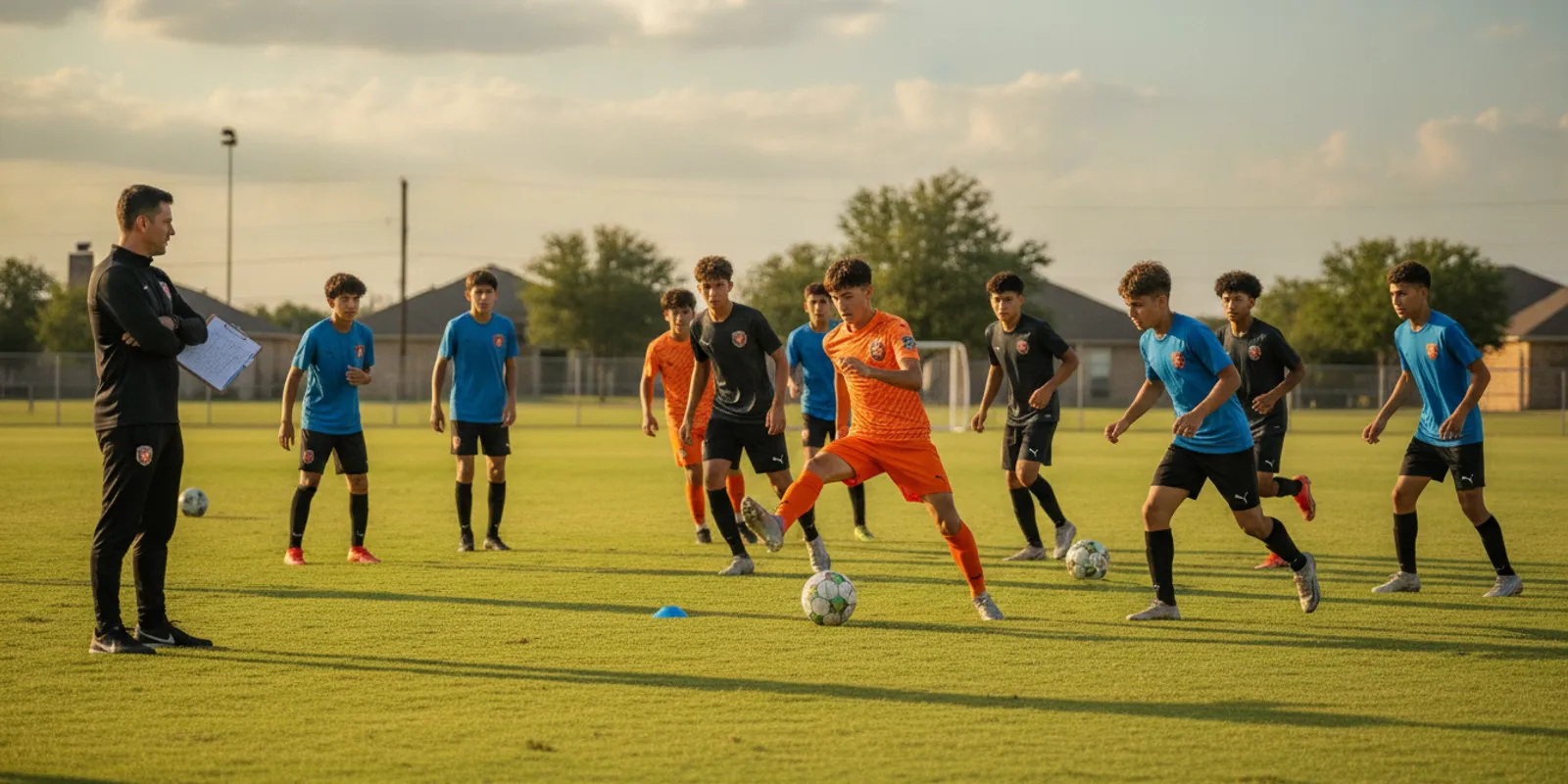
Try a short, repeatable routine during a normal practice:
- Set one team objective.
Choose a behavior players can observe, such as supporting the player on the ball within a useful passing angle.
- Give roles a purpose.
Ask each group to identify who offers width, who provides cover, and who communicates the next action.
- Play a small-sided game.
Keep the focus on the chosen behavior, not just the score.
- Pause for a brief review.
Ask what helped the team execute and what became unclear when pressure increased.
- Repeat under a new condition.
Change the space, direction, or number of touches so players adapt while keeping the same communication goal.
Keep feedback specific and respectful. “We needed earlier cover on that side” gives the group something to try. “You always make the wrong choice” attacks a person and teaches little. A team culture is shaped by how it responds to errors as much as by how it celebrates success.
Which communication habits matter during a match?
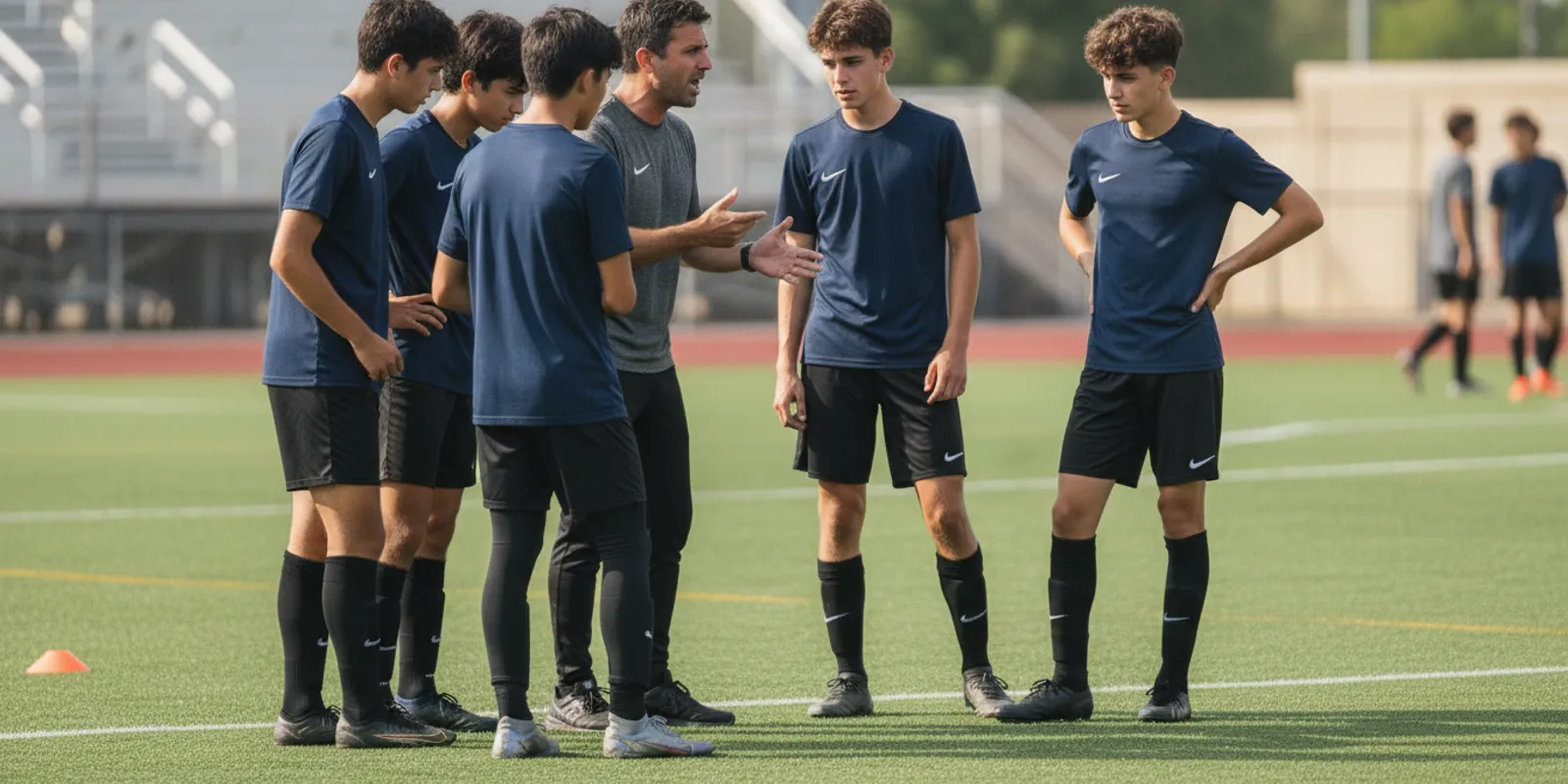
Match communication should be timely, concise, and connected to the next action. Players do not need to narrate everything. They need to share information that a teammate cannot see or cannot process quickly enough alone.
- Before the ball arrives:
Offer a name, direction, or warning about pressure.
- As possession changes:
Call the immediate role—press, cover, or recover—so teammates can react together.
- When a teammate is isolated:
Provide a safe option or tell them where support is coming from.
- After a mistake:
Give a short reset cue and focus on the next defensive or attacking action.
Teams can practice this by setting a communication target in a game, then reviewing a few moments afterward. The point is not to reward the loudest player. It is to make useful information available to the whole group. Players who want to develop their individual execution alongside team habits can review the club’s group soccer training information.
How do roles and shared responsibility fit together?
Clear roles help players understand what the team needs from them. A role should be more than a fixed label such as defender or forward. It includes decisions: where to position, when to support, what to do after possession is lost, and how to help teammates.
Coaches can invite players to explain their role in their own words. A useful answer describes actions in a game situation: “When our wide player receives the ball, I provide cover behind them and communicate if an opponent is approaching.” This shows understanding better than simply naming a position.
Roles should still allow players to learn. If a player is always asked to do only one task, they may miss chances to understand the wider game. Coaches can maintain team structure while rotating responsibilities in practice, then discuss how each choice affects nearby teammates. For more on how structured competition can differ by setting, players can read about types of soccer clubs and teams.
How can families judge a team environment?
Families do not need to decide from a slogan or a single impressive match. Look for observable patterns across training, communication, and competition. Ask how players receive feedback, how expectations are explained, and whether the environment makes room for questions.
What to observe | Healthy sign | Follow-up question |
Communication | Instructions are clear and players are encouraged to speak constructively. | How do coaches help players communicate during difficult moments? |
Feedback | Corrections explain an action and a next step. | How does a player know what to work on after practice? |
Roles | Players understand responsibilities and how roles connect. | Can players learn different responsibilities over time? |
Competition | Results matter, but reflection and development remain part of the process. | How does the team review a match, win or lose? |
Commitment | Expectations for attendance, preparation, and conduct are stated plainly. | What is expected from a player outside match minutes? |
Ask these questions in a calm conversation, not only after a frustrating result. A player’s experience can vary by team and age group, so seek specific answers about the environment they would actually join. A player evaluation can also help clarify current strengths and areas to develop.
What team-building activities are useful?
Activities work best when they connect to a behavior players need in soccer. A social activity can help teammates learn about one another, but it should not be treated as a substitute for good coaching or respectful day-to-day practice.
- Partner reflection:
Players name one helpful action they noticed from a teammate and one communication cue they will use next session.
- Constraint games:
Small groups solve a game challenge with a limit, such as fewer touches, then discuss how they organized support.
- Player-led warm-up:
Teammates take turns leading a familiar routine and communicating transitions.
- Shared review:
After a match, the team identifies one moment of effective cooperation and one adjustment to test in training.
Keep the activity inclusive and appropriate for the players’ ages and comfort. Avoid exercises that embarrass individuals, force personal disclosures, or reward intimidation. The goal is a stronger working relationship, not compliance for its own sake.
How can a player assess whether the fit is right?
A player can consider both their own goals and the way the team operates. Before joining, write down what you want to improve—perhaps decision-making, consistency, communication, or readiness for a higher level of competition. Then ask how training and feedback connect to those goals.
Use this simple comparison to make the discussion concrete:
Question | What to look for |
Are expectations clear? | Specific information about attendance, effort, conduct, and preparation. |
Is feedback usable? | Examples of actions to repeat or adjust rather than vague praise or criticism. |
Does the team communicate? | Players share information and coaches make space for questions. |
Does the pathway match my aim? | A realistic explanation of competition and available development opportunities, without promises of outcomes. |
Families should also confirm practical details directly, including age group, schedule, location, and any program requirements. Do not assume that one team’s format or opportunity applies to another. Foro’s FAQ and contact page are useful places to ask for current information.
How does team building connect to player development?
Individual improvement and team habits reinforce each other. A player develops by practicing skills, making decisions, receiving feedback, and applying lessons in games. A supportive team gives those lessons context: players learn how a first touch creates an option for a teammate, how movement opens space, and how recovery effort protects the group.
Foro Soccer Club’s documented history includes 10 conference championships, the 2021 UPSL national championship, four national-final appearances, and victories over professional clubs in the Lamar Hunt U.S. Open Cup. Its Foro to Pro pathway is connected to 18 players and coaches who reached the professional level. Those milestones describe the club’s record; they do not guarantee an individual player’s outcome. Players and families can explore the Foro to Pro pathway and ask how a particular team’s training and competition align with their goals.
For context on the role of team cohesion in sport, the U.S. Soccer Federation provides resources for coaches and players at U.S. Soccer’s coaching resources.
What is a sensible next step?
Choose one team habit to observe at the next training session: how early players communicate, how they respond to mistakes, or whether roles are clear. Then ask a coach how that habit is taught and how a player can work on it. A focused question gives you better information than trying to judge a team from one result.
Good soccer team building is visible in repeated actions: teammates communicate, fulfill shared responsibilities, and help one another keep learning through competition.
For a clearer view of how routines turn into dependable team behavior, consider what happens before, during, and after a session. Before training, agree on one shared objective and make sure players know the words or signals they will use. During the activity, coaches can watch for moments when teammates anticipate one another, then pause briefly to ask what information helped them coordinate. Afterward, players can name one action worth repeating and one detail to adjust. This simple cycle creates a link between intention and evidence; it also prevents team building from becoming a vague label detached from soccer decisions.
How can a team make feedback useful to everyone?
Feedback is part of the team environment, not only a coach’s job. Players can learn to give one another observations that are specific, timely, and focused on a controllable action. For example, “I was open on your left when you were pressed” identifies a moment and a possible option. “You never pass to me” turns a single problem into a personal accusation. Coaches can model language that keeps the conversation about the game and invite the receiver to respond or ask a question.
It also helps to separate immediate match communication from later review. On the field, use short cues that help the next action. In a debrief, take more time to explain the reason behind a choice, review what the player saw, and consider another solution. That distinction helps reduce overload during play while still giving players room to understand decisions. Families can ask whether feedback includes clear examples and whether players know what to practice next.
What should players do after a difficult match?
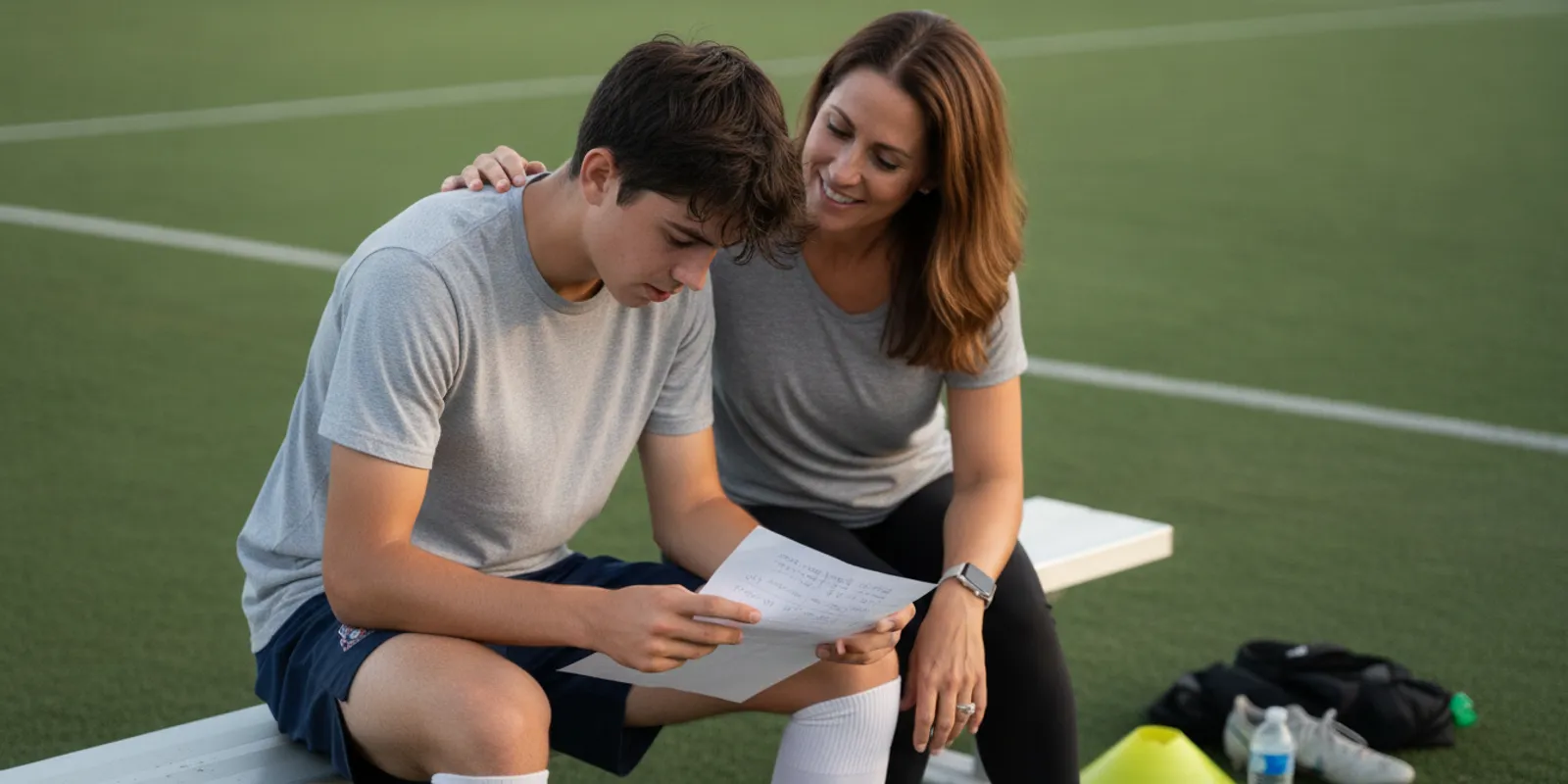
A loss, a mistake, or a tense exchange can reveal how the team handles pressure. The useful response is neither to ignore the result nor to let it define a player. Start with observable facts: when did communication break down, what support was available, and what changed after the team conceded or lost possession? A short review can identify one repeatable adjustment for the next practice. If emotions are still high, wait until players can discuss the event calmly.
Families can support reflection by asking open questions rather than supplying a verdict. “What did you notice before that play?” or “What would help you feel prepared next time?” lets a player explain their view. A coach can then connect the answer to a training goal. The aim is accountability with a route forward: acknowledge an action, identify its effect, and decide what to try next without shaming a teammate.
How can a team include different personalities?
Not every player communicates in the same way. Some speak readily; others contribute through positioning, listening, or a concise cue at the right moment. A team should not confuse volume with leadership. Coaches can create more than one way to contribute by asking players to demonstrate a solution, lead a small group, or share a brief observation after an activity. Rotate these opportunities so responsibility does not belong to only the most confident voices.
Inclusion also means making expectations understandable. Explain the purpose of an activity, define the key terms, and check that players know how to take part safely. When teammates disagree, return to the shared task and ask what evidence from the play supports each view. Different perspectives can help a group see more options, provided players treat one another with respect. This is especially useful in mixed-experience groups, where the same instruction may be interpreted differently.
How can a family compare team-building approaches?
Ask for examples rather than promises. A coach may describe how players review a match, how a new teammate learns the group’s expectations, or how the team responds when communication fails. The details show whether team building is part of normal training or only an occasional event. Families can compare answers using the same questions across programs, then consider whether the approach fits the player’s age, goals, and preferred level of competition.
It is also reasonable to ask how a player can raise a concern. Clear routes for questions help prevent small misunderstandings from becoming lasting frustration. Ask who should be contacted, when a conversation is appropriate, and whether the player is encouraged to speak for themselves when ready. This does not guarantee that every disagreement will disappear; it does show whether the environment has a practical way to address them.
When comparing a team or program, consider the training setting as well as the social dynamic. Foro lists team training and its club story for families seeking information about available opportunities and context. Details can vary by team and season, so confirm current arrangements directly. A useful fit is one where the player understands the expectations, can ask questions, and sees a credible connection between training and the competition they hope to pursue.
Frequently asked questions
Does team building mean every player has to be close friends?
No. Teammates do not need identical personalities or a social relationship outside soccer. They do need enough respect and clarity to communicate, carry out shared responsibilities, and solve game problems together.
Can a team improve communication without adding extra activities?
Yes. Coaches can build communication into regular training by setting a specific cue or shared objective in a small-sided game, then reviewing whether players used it effectively.
What should a player do if teammates blame one another?
Bring attention back to the next useful action and, when appropriate, ask a coach for help discussing the pattern. A calm review of what happened and what to try next is more useful than trading accusations.
How can a family tell whether a team environment supports development?
Look for clear expectations, specific feedback, constructive communication, and opportunities to ask questions. Ask for concrete examples of how the team reviews mistakes and helps players improve.
Comments