
The Foro to Pro Story: How 18 Players and Coaches Reached the Next Level | Soccer Player Development Program
A soccer player development program should help a player improve now while making the next step clearer. For a Dallas–Fort Worth player or family, that means looking beyond a badge or a promise: examine coaching, the training plan, competition, feedback, and whether the program fits the player’s current needs. Foro Soccer Club’s history offers one local example to consider: the club says 18 players and coaches have reached the pro level. That outcome is worth understanding, but it is not a guarantee for any individual player.
What should a player development program help you decide?
“Development” can mean many things. One program may focus on first touch and confidence; another may prepare experienced players for a more demanding team environment. Before comparing options, write down the decision you are trying to make. Is the player looking for more purposeful training, a competitive team, a route toward college opportunities, or a chance to test readiness for a higher level?
A clear goal makes a visit or conversation more useful. For example, a 16-year-old who already plays on a team may want feedback on speed of decision-making and the ability to perform under pressure. A younger player may need consistent fundamentals and enjoyment before committing to a demanding schedule. Neither goal is automatically better. The right program is the one that matches the player’s stage and gives a sensible next step.
Ask the program to explain what players work on, how coaches notice progress, and what participation involves. A useful answer is specific enough that the family can picture a session and understand what happens after the first evaluation. Be cautious if every answer is a promise about future selection, exposure, scholarships, or a pro contract. Development can improve a player’s preparation, but no program can promise those outcomes.
Which signs show that coaching is a good fit?
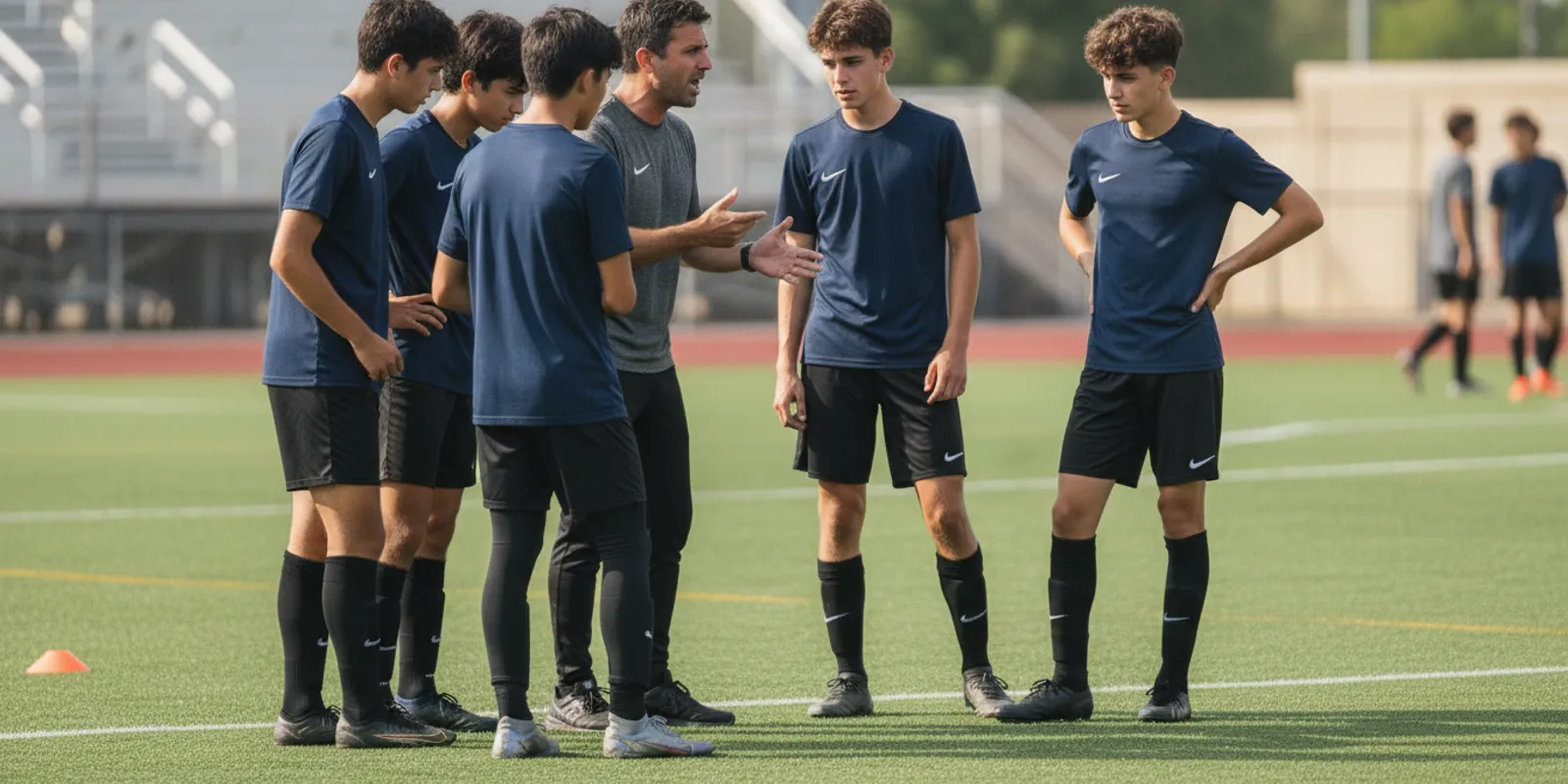
Look for coaches who can explain the purpose of a drill and connect it to decisions players make in a game. A session should not be a random sequence of activities. Ask how coaches balance technical work, small-sided play, positional decisions, and feedback for individual players. The details will vary by age and level, but the coach should be able to tell you why the activities suit this group.
Watch how feedback is delivered. Does the coach give players clear cues they can use on the next repetition? Do players get chances to solve problems rather than being told every movement? Do coaches correct mistakes without humiliating a player? These observations can tell a family more than a slogan. If possible, watch a full portion of a session instead of judging a program from a short highlight clip.
Also ask who leads the sessions and how the club supports consistency when a coach is absent. Foro describes its player-coach approach as a differentiator, and its record includes players and coaches who reached the pro level. Those facts provide context about the organization; they do not establish that every coach or group will be the right fit for every player. Use an evaluation and direct questions to judge the specific training opportunity.
If you want to understand the club’s stated development route, read the overview of the Foro to Pro pathway. For a practical look at the first assessment, see what to expect at a soccer player evaluation.
How can you tell whether the training plan is appropriate?
Ask for a plain-language explanation of the training rhythm. How often does the group meet? What skills or game situations are being emphasized? How does the coach adjust work when players have different experience levels? Families should get accurate answers about the current program rather than rely on a generic schedule or old promotional material.
More training is not automatically better. School, team matches, travel, recovery, and the player’s physical development all matter. Before adding sessions, map the player’s current week, including matches, team practices, travel time, and days available for rest. Ask whether the proposed program can coordinate with those demands and how the player should raise concerns about fatigue or discomfort. A coach may not control every part of a young athlete’s schedule, but the conversation should acknowledge the whole picture. A published academic review considers the relationship between training load and physical development in male youth soccer players. That does not prescribe one schedule for every athlete, but it supports a sensible question: how does the staff consider a player’s overall demands when discussing participation? Read the research on training load and physical development in youth soccer.
Ask whether players receive feedback they can apply between sessions. Feedback might focus on scanning before receiving the ball, body position when defending, or choosing when to pass forward. A useful response identifies one or two priorities and gives the player a way to practice them. A long list of faults is less actionable than a clear next focus.
Make sure the plan reflects the player’s age and experience. A new player may need a broad base of touches and game understanding. A more experienced teenager may benefit from training that challenges decisions at a faster pace. If a program has options for different ages or skill levels, ask how players are placed and how that placement is reviewed.
What should you compare before choosing a program?
Compare the parts of the experience that affect development, not just the headline offer. Use this table as a question list when speaking with a club. The answers should describe the actual group the player would join.
What to compare | What to ask | What a useful answer clarifies |
Coaching | Who leads this group, and how is feedback given? | The coach’s role, the session’s purpose, and how players receive usable guidance. |
Training plan | What will players work on, and how does the focus change? | How activities connect to technical and game decisions over time. |
Competition | What team or match opportunities are available to this player? | The level and format of competition, plus how selection works. |
Time commitment | What is the current attendance and travel expectation? | A realistic picture of weekly demands and how to confirm schedule details. |
Progress review | How will we know whether the player is improving? | What feedback is available and when the family can discuss next steps. |
Program fit | What happens if this group is not the right level? | Whether there is a suitable alternative or a clear recommendation. |
Do not treat a table as a scoring contest where every answer has to sound impressive. A program that is transparent about its limits can be a better fit than one that promises everything. Consider how well the staff answers follow-up questions, whether the player feels challenged in a healthy way, and whether the family can understand the commitment before joining.
How should you judge competition and a pathway?
Competition gives players a chance to apply training under pressure, but the name of a league alone does not tell you whether it suits a particular player. Ask about the team’s level, the selection process, likely role, match environment, and how training relates to competition. Find out whether players are expected to earn minutes through performance, whether the roster changes during a season, and how the staff communicates role expectations. These questions help distinguish a team that offers a realistic development setting from one whose label sounds attractive but whose day-to-day role may not fit. A player may need a developmental team setting before aiming for a more demanding roster. A family should be able to discuss that progression without being pushed into a decision on the spot.
Foro’s documented club achievements include 10 conference championships, a 2021 UPSL national championship, four national-final appearances, and victories over clubs from higher levels in the Lamar Hunt U.S. Open Cup. These are organizational results, not a forecast of an individual player’s future. They can help establish the competitive context, while an evaluation and conversation help determine whether a current team opportunity fits the player.
If you are unfamiliar with the competition structure, review how the UPSL works and the guide to joining a team that competes nationally. The broader guide to soccer club types can also help distinguish a training program from a competitive club experience.
A pathway should be described as connected opportunities, not a conveyor belt. Ask what a player must demonstrate to move forward, who makes that decision, and whether participation in additional programs is optional. Foro describes FPA Performance sessions and pro fitness training through EXOS as optional programs, not club requirements. Families should confirm current eligibility, availability, format, and any costs directly before planning around an option.
What can the Foro to Pro story tell a family?
The phrase “Foro to Pro” points to a connected soccer environment, but the useful question is what evidence sits behind it. Foro’s stated record includes 18 players and coaches who reached the pro level, alongside competitive results at club level. Those are meaningful proof points about the club’s history. They should be read as outcomes achieved by particular people over time, not as a typical result or a promise that a new player will follow the same route.
When reviewing any development story, ask what the claim actually counts. Does it describe players, coaches, or both? What does “reached the pro level” mean in the organization’s account? Is there a clear explanation of how the named pathway worked? A club should be comfortable separating its verified history from what it can offer a player today.
Use the story as a prompt to examine the environment, not as a shortcut around that examination. Look for current training details, an appropriate evaluation, honest discussion of competition, and a fit between the player’s goals and the program. The club’s Foro Soccer Club page is a relevant place to start asking about the competitive side. Players exploring team entry can also use the guide to joining an amateur soccer club in Dallas.
What should players and parents ask at an evaluation?
An evaluation should help both sides understand fit. The player can show current ability, and the staff can explain what they observed. It is not a final judgment of potential. Arrive ready to describe the player’s position, team experience, goals, and any relevant constraints on time or travel. The player should answer for themselves where possible, since their motivation and understanding matter. Parents can help by sharing context without speaking over the athlete: what the player enjoys, what they hope to improve, and what kind of commitment is realistic. If the player is nervous, ask what the session will involve and whether it is individual or group-based. Knowing the format can help the player arrive prepared to participate rather than spend the first minutes trying to guess what is expected.
What did you notice about the player’s strongest current qualities?
What are one or two specific areas to work on next?
Which group or training option do you recommend, and why?
What is the current commitment, including sessions, matches, and travel?
How are roster decisions made, and when should we expect to hear back?
Can we take time to consider the recommendation before deciding?
Listen for answers that connect observations to action. “Improve your game” is too broad to guide the next month. “Check your shoulder earlier before receiving, then open your body to see forward options” gives a player something concrete to try. A good conversation should leave the player with a clearer next step even if the family decides not to join that program.
Foro identifies free evaluations and tryouts as opportunities for players to explore fit. Confirm the current format, location, age group, and availability before traveling. The Dallas soccer club tryout guide can help players prepare, and families can learn how competition and player development connect through a discussion of the club’s championship history.
How can a family make a decision without rushing?
After the evaluation, compare the recommendation with the player’s priorities. Ask the player what felt challenging, what they learned, and whether they can picture committing to the work. Parents can consider logistics, cost information supplied by the club, and how the schedule fits school and family life. Do not infer current prices or schedules from an old article or a different program; request the latest details for the specific opportunity. It can help to write down the answers immediately after the visit, while the details are fresh. Compare the experience against the questions you prepared, not only against how exciting the session felt. If you are considering more than one option, ask each program the same core questions about training, competition, communication, and attendance. That makes the differences easier to see and reduces the chance that a polished presentation outweighs practical fit.
Give yourselves a short checklist: Is the goal clear? Did the coach explain a plan? Is the team or training level appropriate? Do you understand how participation and selection work? Can the family support the time commitment? If an important answer is missing, ask for it before paying or changing teams. A thoughtful pause is not a lack of ambition; it is part of choosing well.
Program fit may change as a player develops. Revisit goals when the player’s skill, confidence, school demands, or interest changes. A suitable program should be able to talk about progression without implying that every athlete must move through every offering. The player’s wellbeing and continued interest belong in the decision alongside competition and long-term aims.
What is a sensible next step?
Start with the question you want an evaluation to answer, then request a conversation about the relevant program. Foro offers training opportunities in the Dallas area, including Irving and Plano; ask which current option fits the player’s age, experience, and goals. You can also explore team training information or review the evaluation process before reaching out.
The best choice is a program that gives the player a clear challenge, useful feedback, and an honest explanation of what comes next.
Frequently asked questions
Does joining a development program guarantee a place on a team?
No. Training participation and team selection are different decisions. Ask how tryouts or evaluations work, what criteria staff use, and when players receive an answer.
Does a club’s record prove that every player will reach the pro level?
No. A club’s history describes outcomes for particular players and coaches. It can provide context, but it cannot predict or guarantee an individual outcome.
Should a young player specialize in one position immediately?
Not necessarily. Ask the coach how the program balances learning a role with broader game understanding. The right approach depends on the player’s age, experience, and goals.
What should a player bring to an evaluation?
Confirm the club’s instructions first. In general, arrive ready to participate, share relevant playing experience, and ask questions about feedback, fit, and the next step.
Use the evaluation to learn whether the opportunity makes sense now, not to pressure the player into a decision about their entire future.


Comments