
What Does a Goalkeeper Clinic Teach? Youth Skills Guide
What does a goalkeeper clinic teach? It teaches a young player how to use goalkeeper-specific technique in a real sequence: get set, read the ball, move, make the save, recover, and choose the next action. A useful clinic is not simply a line of players taking turns at the goal. It is a coached lesson that connects handling, footwork, positioning, communication, and decision-making to situations a goalkeeper may face in a match.
In practical terms, what does a goalkeeper clinic teach? It teaches position-specific skills such as ready position, handling, footwork, shot-stopping, positioning, recovery, communication, and game awareness through age-appropriate practice.
Foro Skills documents specialized goalkeeper training for players ages 5-17 and all skill levels. That range makes the lesson design important. A five-year-old may need short, active activities that build comfort with the ball, while an older competitive player may need faster decisions and more realistic pressure. The subject of this article is the lesson itself: what a player can learn inside a goalkeeper clinic and how coaches can make each activity meaningful. For the broader Dallas guide to program types and goalkeeper development, see Foro's goalkeeper training in Dallas guide.
What does a goalkeeper clinic teach first?
The first layer is a safe, repeatable technical foundation. Before a player can make difficult saves, the player needs a balanced body position, reliable movement, and a way to receive the ball safely. A clinic should introduce these skills in a sequence that the player can understand and repeat.
Ready position and body balance
A goalkeeper's starting shape affects every action that follows. Players learn to keep the feet active, stay balanced, bend the knees, and keep the hands prepared rather than locked at the sides. The exact stance changes with the situation. But the coaching goal is consistent: begin in a position that allows the player to move in more than one direction without needing an extra reset step.
For younger players, this may look like a simple game in which they freeze in a ready position before the coach serves the ball. Older players can add a visual cue, a change of angle, or a pass before the shot. The activity changes with the player, but the lesson remains the same. A good starting position gives the goalkeeper more time and more options.
Handling and securing the ball
Handling is more than catching a ball that arrives at a comfortable height. Players learn to shape the hands, move the body behind the ball, absorb the pace, and secure possession when the situation allows it. They also learn that not every ball should be caught. When a clean catch is not realistic, the goalkeeper may need to parry the ball away from danger or protect the next action while recovering.
A coach can progress from gentle, predictable service to balls arriving at different heights, speeds, and angles. The progression should be appropriate to the player's size, coordination, confidence, and experience. Repetition matters, but so does feedback. The player should know whether the problem was hand position, footwork, body shape, timing, or the decision to attempt a catch.
Safe movement and recovery
Goalkeepers need to move toward the ball, across the goal, and back into a useful position after an attempt. A clinic can teach short adjustment steps, lateral movement, forward movement, and recovery after going to ground. These actions should be introduced with attention to safe technique and controlled progressions. Speed and height should increase only when the player is ready for the next challenge.
Begin in a balanced position with the eyes on the ball.
Use efficient footwork to get the body behind the likely path of the ball.
Choose a safe way to receive, redirect, or block the ball.
Recover quickly enough to see and respond to the next action.
How do goalkeeper drills turn technique into a save?
A clinic becomes more useful when the coach builds a chain of actions instead of treating each skill as an isolated trick. The player should understand what happens before the save, during the save, and immediately afterward. This is where a session can move from basic repetition to applied learning.
Read the service before moving
The goalkeeper begins by reading the ball and the situation around it. Is the ball traveling toward the near post, the far side, or the space in front of the goal? Is it a shot, a pass, a cross, or a loose ball? Does the player have time to set, or is an immediate reaction required?
At an introductory level, a coach may use clear service and ask the player to call out the ball's direction. With more experienced players, the coach can add a screen, a second attacker, a pass before the shot, or a rebound. The purpose is not to make the drill confusing. The purpose is to help the player notice useful information before committing to a movement.
Move, set, and make the action
Footwork connects the read to the save. A goalkeeper who moves too early may lose balance. A goalkeeper who stays fixed may give the ball an easier path to the corner. Clinics can teach players to use small adjustment steps, get set when possible, and then make the appropriate save action. Coaches may work through low balls, balls at the body, higher service, close-range reactions, or shots after a change of direction.
The best progression allows the player to experience success before pressure increases. A young goalkeeper may first move one step and receive a manageable ball. An older player may need to set after a pass, react to a deflection, or recover for a second shot. Each version asks the player to coordinate technique with timing.
Recover and reset
The save is not always the end of the play. A goalkeeper may need to secure the ball, push it away from danger, get back to the feet, or prepare for a second action. Recovery work helps players avoid staying on the ground after the first attempt. It also builds the habit of looking for the next threat instead of assuming the play is finished.
Foro Skills describes its goalkeeper focus as including shot-stopping, handling, footwork, agility, positioning, and game awareness, with dynamic drills and friendly competitions. Those documented elements fit together when a session asks the player to complete a full sequence rather than collect disconnected repetitions.
What does a goalkeeper clinic teach about decisions and communication?
Goalkeeper coaching should develop thinking as well as movement. A player can make a technically clean save and still need to decide where to put the ball, whether to claim a cross, or how to organize the defense for the next phase. Decision-making practice gives a young goalkeeper a reason for the technique.
Choosing between hold, parry, and reset
One useful coaching question is, "What is the safest next action?" If a ball can be secured cleanly, holding it may remove the immediate danger. If the ball is too difficult to hold, redirecting it away from the center may be the better choice. After the action, the goalkeeper may need to reset position and scan again.
Young players do not need a complicated vocabulary to begin learning this process. A coach can offer two clear choices, demonstrate both, and ask the player to explain the choice after the repetition. Older players can handle more variables, such as pressure from an attacker, the position of teammates, or the location of a second ball.
Positioning relative to the ball and goal
Positioning is not one permanent spot on the goal line. It changes with the ball's location, the angle of attack, the position of teammates, and the space behind the defense. A clinic can use cones or moving service to show how a small adjustment changes the available angle.
The lesson should remain practical. Players can learn to ask where the ball is, where the most dangerous space is, and whether the current position allows them to respond. The goal is not to make a young goalkeeper calculate a formula. It is to build awareness that makes the next movement more purposeful.
Communication that helps teammates
Because goalkeepers often see the play in front of them, they can help teammates with early, specific communication. A clinic may practice short calls for pressure, cover, marking, or responsibility for a ball. The player can then apply the call in a small-sided or game-like activity.
Communication should be connected to an action. A loud call without a clear purpose does not organize the defense. Coaches can ask the goalkeeper to identify the danger, use a concise instruction, and then reassess after the ball moves. This teaches players that communication is part of decision-making, not a separate performance.
Research on goalkeeper learning has examined how task and environmental constraints influence performance. The study indexed by PubMed supports the value of varied practice conditions when players are learning to respond to changing situations. A clinic can apply that principle without making every repetition chaotic. The coach can change one variable at a time, then watch whether the player transfers the skill.
How should a goalkeeper clinic adapt for ages 5-9, 10-13, and 14-17?
The answer to what does a goalkeeper clinic teach depends on the player's age, experience, confidence, and readiness. The age bands below are practical planning groups, not rigid rules. An older beginner may need foundational work, while a younger player with more experience may be ready for a more challenging version of a drill.
Age band | Lesson emphasis | Example practice | Progress to notice |
5-9 | Comfort, balance, simple handling, and enjoyment. | Short active games, ready position, rolling, catching, basic movement, and manageable shots. | Willingness to engage, safer hands, balanced movement, and growing confidence. |
10-13 | Reliable technique, footwork, positioning, and early game awareness. | Movement across the goal, shot-stopping patterns, recovery actions, and simple choices under pressure. | Cleaner technique, better starting positions, and more purposeful movement. |
14-17 | Consistency, decisions, communication, and realistic application. | Higher-tempo activities that combine saves, movement, distribution, and changing situations. | Quicker reads, repeatable execution, clearer communication, and stronger transfer to play. |
Ages 5-9: build comfort and coordination
At this stage, a clinic can make the goal feel welcoming and understandable. Players may learn how to track the ball, make a simple ready position, catch a ball with two hands, and move safely toward it. Short activities and frequent turns help maintain attention. Coaches can use games, targets, and friendly challenges to create repetition without making the player feel as if every error is a test.
Ages 10-13: connect technique to choices
Players in this band can often handle more detailed feedback and longer sequences. A coach may connect a shuffle step to an angle, an angle to a set position, and that position to a save. Small-sided activities can introduce scanning, communication, and recovery while keeping the decisions manageable. The player should leave with a clearer understanding of why a movement matters.
Ages 14-17: increase speed and realism
Older players can work through more demanding situations, but complexity should still serve a clear teaching point. A session may add a pass before the shot, a rebound, a cross, pressure from an attacker, or a distribution choice. Players can be asked to explain what they saw and why they selected a response. An older beginner should not be pushed into advanced work simply because of age. The coach should match the challenge to experience and technical readiness.
What should parents and players observe during a clinic lesson?
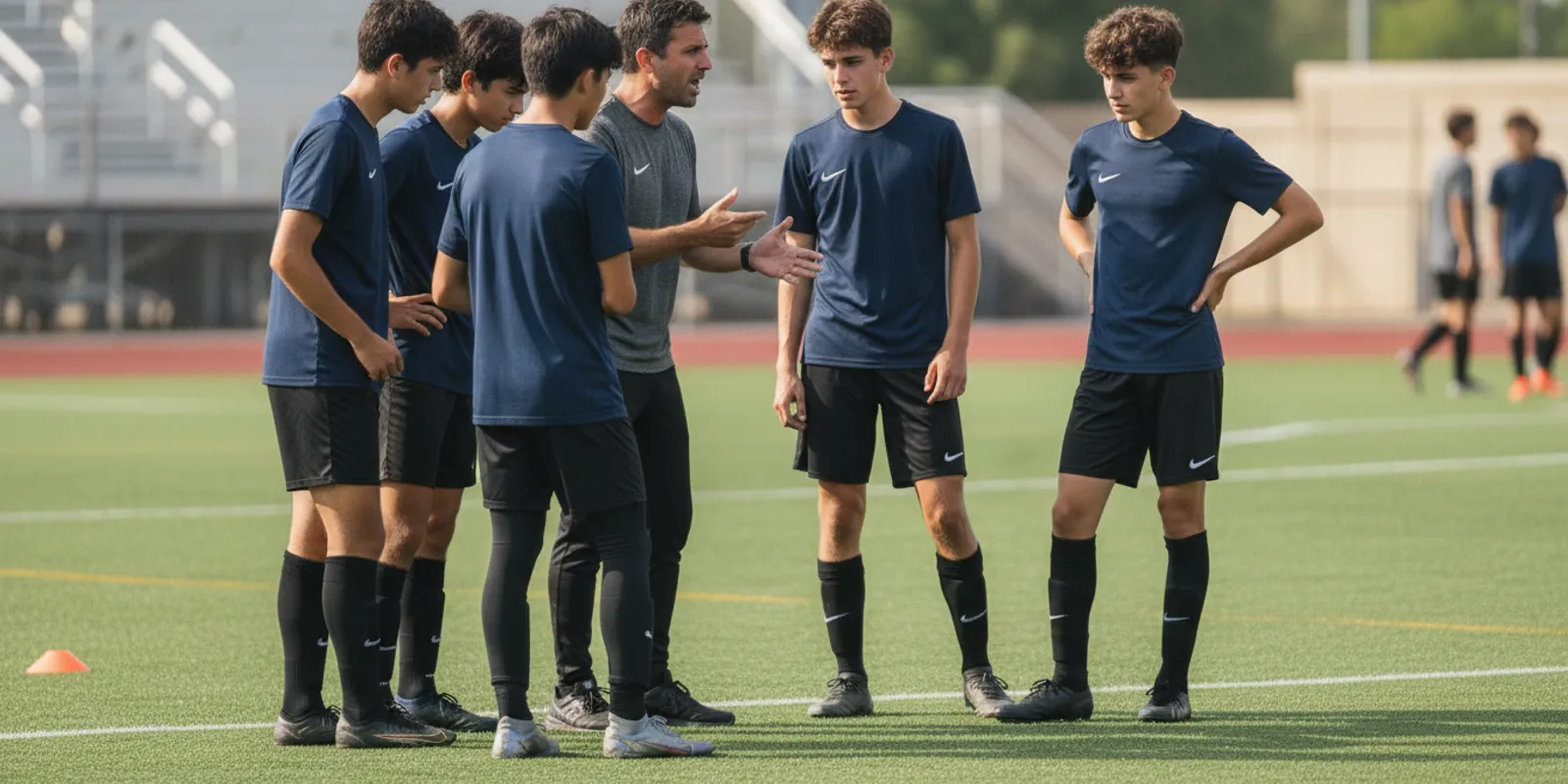
A strong clinic makes the learning visible. Parents do not need to judge every drill, and players do not need to master every skill in one session. Instead, look for a clear connection between demonstration, practice, feedback, and application.
- A clear teaching point:
the coach explains what the player is trying to improve.
- Age-appropriate progressions:
the activity becomes harder only when the player is ready.
- Specific feedback:
the coach identifies a body position, movement, decision, or cue to try again.
- Goalkeeper-specific content:
the session includes position skills rather than only general soccer activity.
- Application:
the player gets an opportunity to use the skill while the situation changes.
- Positive accountability:
the player is challenged while still receiving instruction that builds confidence.
It is also useful to listen to the player's explanation after a repetition. Can the player say what happened, what choice was made, and what to try next? A short answer is enough. The purpose is to build awareness, not to turn a youth session into a classroom lecture.
How can a player practice after a goalkeeper clinic?
One session becomes more valuable when the player carries one clear lesson into the next practice or game. The follow-up does not need to be complicated. Choose an observable action, practice it in a controlled setting, and then look for it when the situation becomes more realistic.
- Choose one cue.
Use a short reminder such as "set before the shot," "get behind the ball," or "scan after the save." One cue is easier to use than a long list.
- Repeat the movement at a manageable speed.
Practice ready position, adjustment steps, handling, or recovery before adding pressure. Quality matters more than rushing through repetitions.
- Add one decision.
Ask the player to choose between holding, parrying, staying, moving, or distributing. The coach or teammate can vary only one part of the situation at first.
- Review what the player saw.
After several repetitions, ask what changed and why the player selected the response. This links the movement to game awareness.
- Record the next focus.
Note one strength and one correction in the player's own words. Bring that cue into the next session.
Progress should be judged over repeated opportunities, not by one spectacular save. A young goalkeeper may show improvement through a more balanced starting position, cleaner handling, quicker recovery, clearer communication, or greater willingness to make a decision. Those small actions form the foundation for more advanced play.
Frequently Asked Questions
What should a young goalkeeper learn first?
A young goalkeeper should begin with comfort around the ball, a balanced ready position, safe handling, simple footwork, and the confidence to get involved. Coaches can then connect those basics to positioning and game awareness. The first priority is a reliable foundation, not advanced diving or complex tactics.
Does a goalkeeper clinic only teach shot-stopping?
No. Shot-stopping is important, but a complete clinic can also teach handling, footwork, positioning, recovery, communication, distribution, and decisions about what to do next. The exact emphasis should change with the player's age, experience, and current needs.
How should goalkeeper training change with age?
Training should become more demanding as the player is ready, while staying appropriate to experience and physical development. Younger players may focus on movement, comfort, and simple technique. Older players can add more pressure, changing angles, communication, distribution, and decisions that resemble match situations.
How can a player measure progress after a clinic?
Track repeatable actions rather than expecting instant results. A player can review handling, footwork, starting position, recovery, communication, decision timing, and confidence during similar practice situations. A coach's specific feedback can identify the next focus for training.
Ready to explore goalkeeper-specific coaching?
A first session gives a young player a chance to experience position-specific instruction and identify a practical next step. Visit Foro Skills to request a free first goalkeeper clinic session.
Comments