
Youth Soccer Tryouts in Dallas: What to Expect and How to Prepare
Youth Soccer Tryouts in Dallas: What to Expect and How to Prepare
Preparing for youth soccer tryouts in Dallas can feel like a lot for both players and parents. The goal is not to look perfect for one session. It is to arrive ready to compete, listen, make good decisions, and show the habits that help a team. This guide explains what coaches usually watch, how to prepare without overtraining, what to bring, and what to ask after an evaluation.
Contact Foro Skills to book a free first session and help your player find an age- and level-appropriate next step.
For a broader look at Dallas youth training formats and age groups, read Youth Soccer Training in Dallas: Ages and Programs. This article focuses more narrowly on the tryout and evaluation experience.
What do coaches look for at a youth soccer tryout?
Quick answer: Coaches look at technical control, decisions, movement, effort, communication, coachability, and response to mistakes. A player does not need to score every time to make a strong impression. Consistent involvement, smart choices, and a willingness to help the team often reveal more than one standout moment.
Every club uses its own process, but a youth soccer tryout commonly combines warmups, technical activities, small-sided games, and larger game situations. The format lets coaches see how a player performs with the ball, without the ball, and under changing pressure.
- First touch and ball control:
Can the player receive, protect, and move the ball with purpose?
- Decision-making:
Does the player recognize when to pass, dribble, switch play, or move into space?
- Movement away from the ball:
Does the player create options, recover defensively, and stay connected to teammates?
- Effort and repeat actions:
Does the player stay engaged after losing possession or making a mistake?
- Communication:
Does the player use clear, useful information with teammates?
- Coachability:
Does the player listen, apply feedback, and remain positive during a demanding session?
Players should show their real game instead of forcing a highlight-reel move on every touch. A simple pass that keeps possession, a recovery run, or a timely defensive decision can be just as valuable as a goal. Coaches are trying to understand how a player contributes now and where the player may develop next.
How should a player physically prepare for a Dallas soccer tryout?
Quick answer: The best physical preparation is consistent soccer activity, good recovery, and a lighter schedule before the evaluation. Players should not attempt a new, exhausting workout the day before. Arrive rested, fueled, hydrated, and ready to move through repeated soccer actions at game speed.
Start preparing several days ahead. Keep normal training consistent, then reduce unnecessary extra work as the tryout approaches. The purpose is to arrive sharp, not tired. A simple preparation plan can include:
- Keep the ball at your feet:
Use short sessions for passing, receiving, dribbling, and finishing. Prioritize clean technique over a long workout.
- Practice game decisions:
Play small-sided games or activities that require scanning, changing direction, and making choices under pressure.
- Build in recovery:
Protect regular sleep, eat familiar meals, and drink water throughout the day. Avoid experimenting with supplements or unfamiliar foods before the session.
- Reduce the load before tryout day:
Use light movement, mobility, and a few confident touches rather than a hard conditioning test.
- Prepare mentally:
Choose two controllable goals, such as communicating more often or recovering quickly after a mistake.
Parents can help by keeping the conversation practical. Ask the player what they want to show, help organize equipment, and avoid turning the session into a judgment about the player's future. A calm routine makes it easier for the player to focus on the next action.
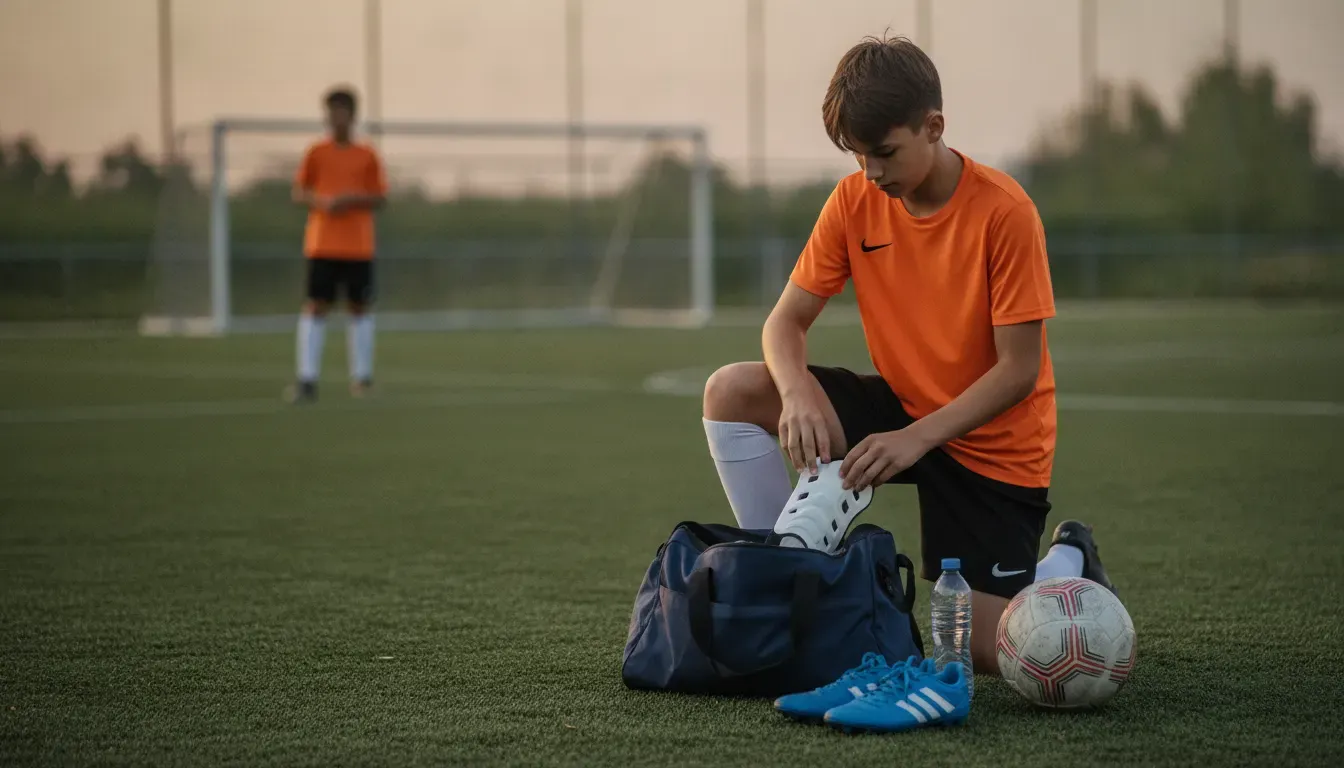
What should a player wear and bring to a youth soccer evaluation?
Quick answer: Wear comfortable soccer clothing and bring the equipment needed to train safely. Pack the night before so the player can arrive early rather than searching for gear in the car. If the club sends specific instructions, follow those instructions first.
Item | Why it matters |
Soccer cleats | Use footwear appropriate for the confirmed field surface. |
Shin guards | Protect the lower legs during contact and game activities. |
Water | Support regular hydration before and during the session. |
Ball | Bring one if the evaluation instructions request it. |
Extra shirt and socks | Useful after a sweaty session or changing weather. |
Required forms | Complete any registration or waiver steps the club provides. |
Also confirm the location, arrival time, parking, check-in point, age group, and field surface before leaving home. Dallas weather can change quickly, so a light extra layer and sunscreen may be useful when appropriate. Do not assume that every tryout has the same equipment or parent access rules. The club's instructions are the final source for that session.
How does a Foro free evaluation compare with a traditional tryout?
Quick answer: A traditional tryout is usually a team-selection event, while a free evaluation can be a lower-pressure starting point for understanding a player's current level and next training option. Foro Skills uses free first sessions and evaluations to help players and families identify an appropriate path before deciding what should come next.
The right next step depends on the player's age, experience, goals, and interest in competition. Foro Skills serves young players through age-appropriate classes and training, while Foro Soccer Club gives competitive players a separate club pathway. A free session is not a promise of a roster spot, and it should not be presented as one. It is an opportunity to experience the environment, demonstrate current abilities, and discuss fit.
Families should ask what the session is designed to evaluate, which age group it serves, and what happens afterward. If the player needs focused technical work before a competitive tryout, 1-on-1 soccer training may be a useful separate option. It should complement, not replace, the team or evaluation goal.
Contact Foro Skills to start a free session if you want a clear, practical way to understand your player's current fit and possible next step.
What happens after a youth soccer evaluation?
Quick answer: After an evaluation, the useful outcome is a clear conversation about fit, development priorities, and next steps. Placement can depend on the player's age, current level, position, team needs, schedule, and the club's available opportunities. Families should confirm details directly rather than assuming one session decides everything.
Before leaving, ask when and how the club will follow up. If feedback is provided, request one or two specific development priorities rather than a general rating. For example, the next goal might be improving the first touch under pressure, communicating earlier, or repeating defensive recovery runs.
Use the result to choose the next action:
- Ready for competitive placement:
Confirm the team, schedule, training expectations, registration steps, and any required documents.
- Needs more development first:
Ask which skills should be trained and when the player can be reevaluated.
- Unsure about the right format:
Compare age-appropriate classes, technical training, private sessions, and club opportunities based on the player's goals.
- Interested in a longer pathway:
Ask how consistent training and competition can support the player's development over the next season.
For a detailed explanation of the evaluation process itself, see What to Expect at a Soccer Player Evaluation. For broader seasonal club-tryout planning, see Soccer Club Tryouts 2026: How to Prepare and Stand Out. Keeping those topics separate helps families find the answer that matches their immediate question.
Frequently Asked Questions About Youth Soccer Tryouts in Dallas
How early should a player arrive for a Dallas soccer tryout?
Arrive early enough to park, check in, change, and complete a calm warmup. The exact recommendation depends on the club and location, so confirm the arrival instructions before the session. Building in extra time is better than arriving rushed and distracted.
What if my child makes a mistake during the evaluation?
A mistake is a normal part of soccer and does not define the whole session. Encourage the player to recover quickly, communicate, and make the next useful decision. Coaches often learn as much from a player's response to an error as from the original play.
Does a free evaluation guarantee a team roster spot?
No. A free evaluation is an opportunity to demonstrate current ability and discuss fit, not a guarantee of placement. Ask the club how it handles evaluation feedback, available programs, age groups, and next steps after the session.
Should a player train hard the day before a tryout?
Usually, no. A player should arrive fresh rather than tired from a last-minute conditioning test. Light movement, familiar technical touches, regular meals, water, and normal sleep are more useful than adding a hard new workout immediately before the evaluation.
What should parents ask after a youth soccer evaluation?
Ask what the player did well, which one or two skills should improve next, what program or team level may fit, and when the club will follow up. Also confirm schedule, location, registration requirements, and any expectations that affect the family decision.
Where can Dallas-area families start if they are unsure about the right program?
Families can start with a free first session through Foro Skills and use the conversation to identify an age- and level-appropriate direction. Players interested in competitive club soccer can also review the Foro Soccer Club pathway and confirm current evaluation details directly with the club.
Ready to take the next step? Contact Foro Skills to book a free first session, then arrive prepared to learn, compete, and find the right development path for your player.


Comments