
Soccer Training for Teenagers Dallas: Ages 13-17
Finding the right soccer training for teenagers dallas can be difficult for families comparing local options. A 13-year-old who is ready for more challenge needs something different from a younger player learning basic ball control. Teen players need purposeful repetitions, faster decisions, realistic game situations, and coaches who can explain how each exercise connects to match play.
Foro Skills offers a distinct high-intensity training track for ages 13-17. It is designed for boys and girls at different skill levels. From developing players to advanced athletes who want to sharpen technique, strategy, and fitness in a demanding but supportive setting. If you are comparing options, start with this guide to youth soccer training in Dallas, then use the criteria below to decide what your teenager needs next.
Book a free first session or player evaluation to see whether the training environment fits your teenager.
Why Teenagers Need a Different Soccer Training Approach
Teenage players are not simply younger players who need more of the same drills. Between ages 13 and 17, many athletes are trying to turn individual skill into reliable performance inside a team. They need to recognize pressure, choose an option quickly, move after passing, defend with purpose, and repeat good decisions when the session becomes demanding.
That is why age fit matters when families compare soccer training for teenagers in Dallas. A foundational class may be the right choice for a younger player who is learning comfort with the ball. A teenager who already understands the basics may need a faster pace, more realistic opposition, and coaching that asks for execution rather than simple participation.
The right program should still meet the player where they are. Foro's 13-17 offering is intended for boys and girls across a range of abilities, from beginners through advanced athletes. The difference is the training lens: sessions can build technical control while also asking players to apply that control in changing situations. A developing player can work on confidence and consistency. An advanced player can be challenged to improve speed of thought, tactical detail, and quality under pressure.
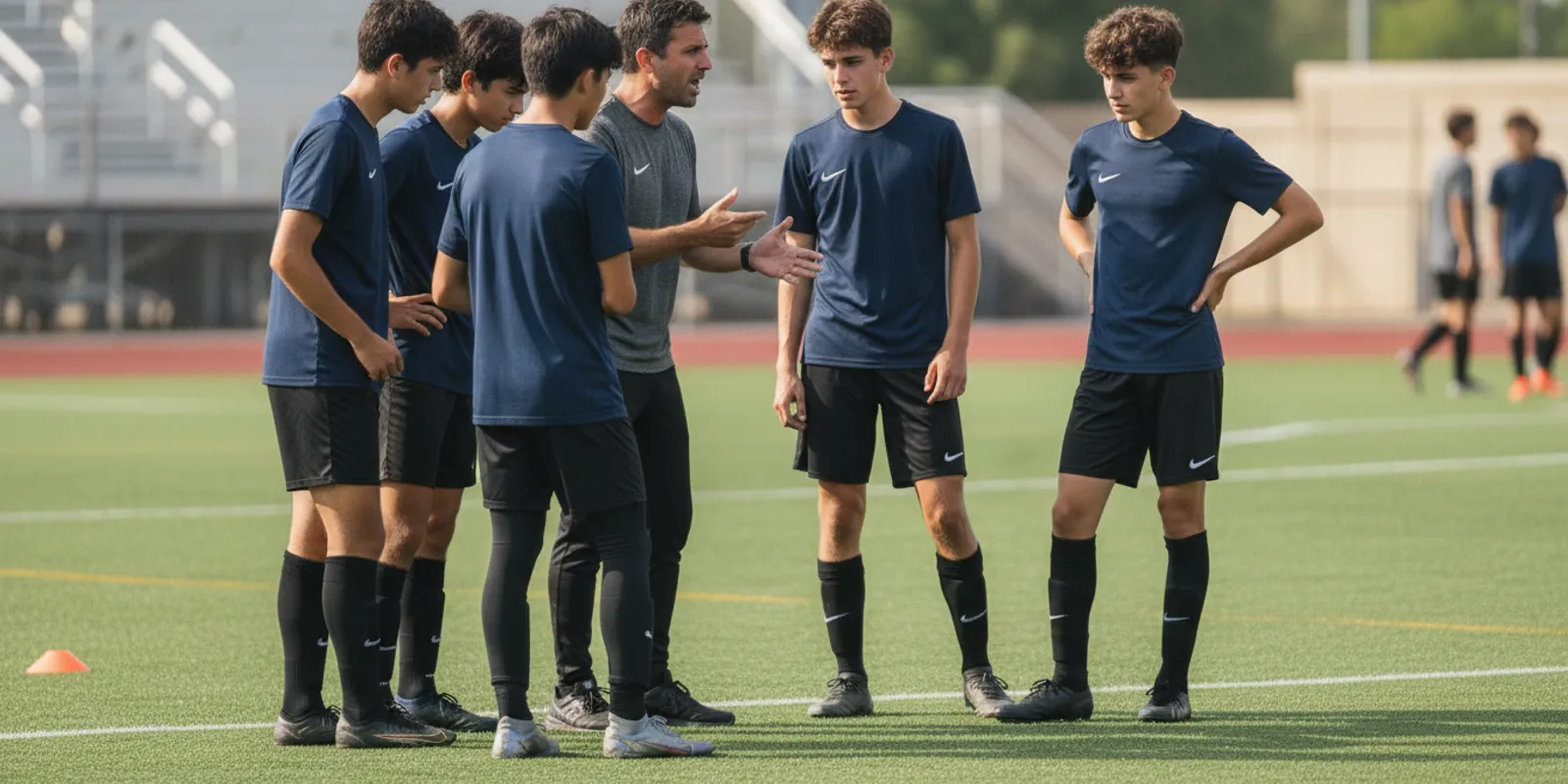
Parents should look for a clear connection between an exercise and the game. Ask what the player is expected to notice, decide, and execute. Players should leave with more than fatigue. They should understand what improved, what needs attention, and how to carry the lesson into team training or competition.
Intensity also needs structure. High-intensity does not mean constant sprinting or a session with no coaching pauses. It means the work has a clear purpose, the pace is appropriate for the age group, and players are challenged to stay engaged. A strong coach can raise the demand while maintaining technical quality, communication, and a positive development environment.
What High-Intensity Soccer Training Looks Like for Ages 13-17
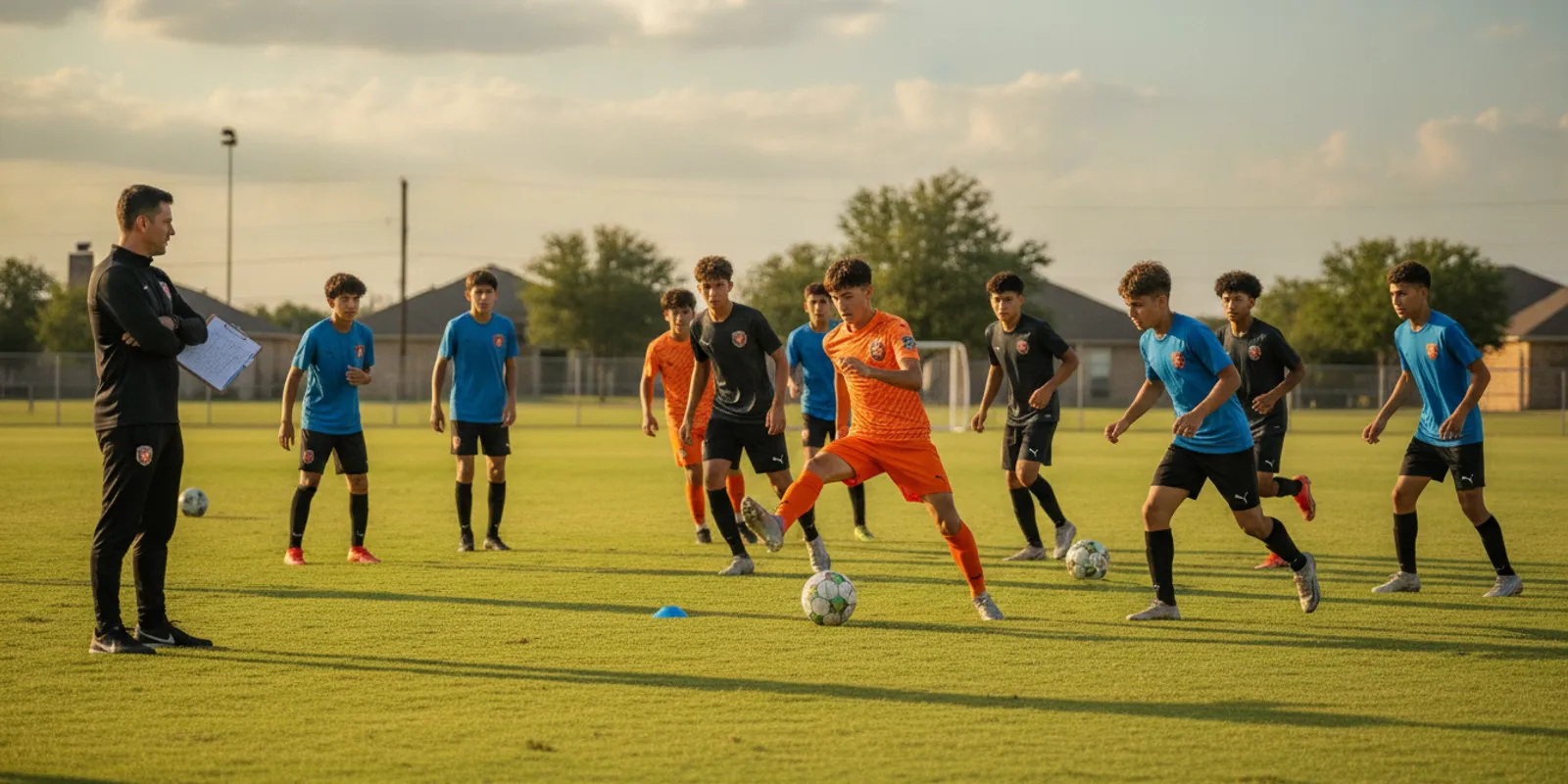
High-intensity training for teenagers combines technical work, strategy, and fitness instead of treating those areas as separate from the start. Players may refine their first touch, passing, dribbling, finishing, and defending, then immediately use those skills in a decision-making exercise. The goal is to make technique useful at the speed and pressure of the game.
A productive session usually has a progression. It may begin with a technical problem, add movement or pressure, and finish with a small-sided or game-realistic activity. The coach can then observe whether the player transfers the skill when space closes, teammates move, or an opponent changes the picture. This format gives teenagers a reason for every repetition.
Foro's teen program emphasizes a fast-paced, high-energy environment and game-realistic settings. Sessions are offered multiple times each week, giving players the opportunity to build consistency rather than treating development as an occasional event. The exact schedule should be confirmed during the evaluation because the best plan depends on the player's current level, team commitments, and goals.
Fitness should serve soccer. Teen players can benefit from work that improves their ability to repeat actions, recover between efforts, and stay technically composed late in a practice or match. Coaches should explain how the physical demand connects to the player's role, rather than presenting conditioning as punishment or as a generic workout.
Players and parents can evaluate intensity by asking five questions:
How much of the session involves the ball and realistic decisions?
Does the coach adjust the challenge for different skill levels?
Are players coached on what to do after they pass, lose the ball, or win it?
Is the pace demanding without sacrificing technique and understanding?
Can the player attend consistently enough to build momentum?
The best program is not necessarily the loudest or most exhausting option. It is the one that creates repeatable habits players can use when the game moves quickly.
How Dallas Teen Players Build Complete-Player Habits
Complete-player development means more than collecting individual moves. A teenager needs technical control, tactical awareness, physical readiness, communication, and the confidence to make a decision. Those areas reinforce each other. A player with a clean first touch has more time to scan. A player who understands spacing can receive with a better body shape. A player who communicates early can help the whole group respond.
When comparing soccer training for teenagers in Dallas, look for coaches who teach those connections directly. Ask whether players learn how to create space, support the ball, recognize defensive cover, and respond when the first option is not available. These details help a teenager transfer training into school, club, or competitive matches.
Coach quality matters because teenagers need feedback they can use. Foro describes its coaches as active or former high-level players who provide authentic soccer mentorship. That background can help coaches demonstrate the demands of the game. But the real test is whether they can explain the next adjustment clearly and give a player a chance to apply it.
Training should also build ownership. Players should be encouraged to ask questions, recognize their own patterns, and take responsibility for improvement. Parents can support that process by asking what the teenager learned and what they plan to work on. Instead of measuring every session only by goals scored or how tired the player feels.
Different formats can support different needs. Group clinics may be useful for players who need frequent repetition and competition with others. High-intensity soccer clinics can complement team practices when a player needs focused development in a shared setting. A player who already has a team may also benefit from custom team soccer training that fits the group's goals and existing schedule.
Teenagers do not all need the same plan. The strongest starting point is an honest evaluation of current skill, confidence, fitness, position, schedule, and goals. That conversation helps the coach set an appropriate challenge without confusing intensity with a one-size-fits-all workload.
How the Foro to Pro Pathway Supports Long-Term Development
Many teenage players want to know where training can lead. A useful pathway does not promise that every athlete will play professionally. It gives players a clearer progression, stronger habits, and opportunities to test themselves as their level develops.
Foro connects youth development with Foro Soccer Club and a broader pathway toward high-level competition. That makes the long-term conversation practical: a player can focus on the next technical or tactical improvement while understanding how consistent training may support future opportunities. The pathway is an opportunity, not a guarantee of a contract, scholarship, recruitment result, or professional placement.
The club's documented history gives families concrete context. Foro reports 10 conference championships, the 2021 UPSL National Championship, four national-final appearances, and 18 players and coaches who reached the professional level. These achievements describe the organization and its experience. They should not be read as a promise that an individual teenager will reach the same outcome.
For a player ages 13-17, the immediate value of a pathway is often clarity. What does the player need to improve before the next evaluation? What level of competition is appropriate? Which habits need to become automatic? How should training fit around school, team commitments, and recovery? A coach who can answer those questions helps an ambitious teenager replace vague goals with a workable development plan.
Families should also keep optional programs distinct. FPA Performance sessions and pro fitness training through EXOS may be relevant for some players. But they are optional programs, not mandatory requirements for the teen soccer training track. Ask what is included in the selected program and what is an optional add-on before making a decision.
To learn more about the competitive side of the pathway, review the Foro Soccer Club pathway. Then bring specific questions to an evaluation so the next step reflects the teenager's current needs.
How to Choose Soccer Training for Teenagers in Dallas
Search results for Dallas youth soccer include clubs, academies, camps, private coaches, and recreation programs. The right choice depends less on a broad label and more on fit. A parent comparing programs should understand who the sessions are for, how the work is coached, and how the player will know whether progress is happening.
Start with age and ability. A 13-year-old beginner may need a different entry point from a 17-year-old advanced player preparing for a higher level of competition. Look for a program that can welcome different starting points while still providing a meaningful challenge. Foro's ages 13-17 track is described for players from beginners through advanced athletes, with skills, strategy, and fitness developed in a fast-paced setting.
Next, evaluate the training model. Ask how often sessions run, how much time is spent in game-realistic situations, and how coaches adapt exercises. Multiple weekly sessions may help a player build momentum, but only if the schedule is realistic for the family. Consistency matters more than selecting a demanding schedule that the player cannot maintain.
What to compare | Questions to ask |
Age and level | Can the program challenge a 13-17 player without treating every athlete the same? |
Training content | Do sessions connect technique, strategy, fitness, and game decisions? |
Coaching | Will the player receive clear feedback and a chance to apply it? |
Schedule | Can the family attend consistently across the season? |
Next step | Is there an evaluation or first session to confirm fit? |
Then evaluate coaching and communication. A good coach should be able to explain a session's purpose, give specific feedback, and show the player how to apply a correction. Parents should be able to ask what the program develops without receiving vague promises. Teenagers should also have a voice in the process because ownership becomes increasingly important as they mature.
Finally, ask about the next step. Is there a free evaluation or first session? Can the family observe the environment? What should the player bring? How will the coach decide whether the program is a fit? Foro offers a free first session or player evaluation, which gives a Dallas-area family a practical way to begin the conversation.
Foro also serves nearby players in Irving, Plano, and Addison. If you are comparing options across the area, review the Foro soccer training FAQ and confirm the current schedule, format, and program details directly rather than relying on an old listing or an unverified price.
How to Start at Foro Skills
Starting does not require a teenager to arrive with a perfect highlight reel or a fixed position. The useful first step is an honest conversation about age, experience, goals, schedule, and the type of challenge the player is ready to handle.
- Choose the teen training track.
The free-session flow includes a Soccer Training ages 13-17 option, so families can begin with the program that matches the player's age.
Book a free first session or evaluation.
Use
the free first-session booking page
to request the next step.
- Bring useful questions.
Ask how the program fits the player's current level, how often sessions are available, and what the coach wants to develop first.
- Review the fit after the session.
Consider whether the pace, coaching, group setting, and schedule support consistent development.
Foro's primary facility is listed at 14719 Preston Road, Dallas, TX 75254, and the program serves families in Dallas and nearby Irving, Plano, and Addison. Confirm the current location and schedule when booking. If a teenager is looking for short-term or seasonal work, Dallas soccer camps for players may be another format to ask about.
Pricing should be discussed as part of fit, not guessed from a search result or an old post. Ask what the current program includes, how sessions are scheduled, and which optional services are separate. That keeps the decision accurate and helps families compare the actual training experience rather than a number without context.
The goal of the first visit is simple: identify a useful next step. For one player, that may be building technical confidence. For another, it may be increasing decision speed or preparing for a more competitive environment. A clear evaluation makes the next phase easier to plan.
FAQ About Soccer Training for Teenagers in Dallas
What are some good soccer schools in Dallas?
A good soccer school should match the player's age, current ability, goals, and schedule. For teenagers, look for purposeful technical work, tactical teaching, game-realistic practice, qualified coaching, and a clear way to evaluate fit. A free first session can help a family judge the environment before making a longer commitment.
What are the best soccer clubs in Dallas for competitive youth players?
The best club depends on what the player needs next. Compare coaching, competition level, training frequency, age fit, communication, travel expectations, and development support. Foro's broader pathway connects youth training with competitive soccer, but families should use an evaluation to determine whether the current program fits the individual player.
Are there youth soccer camps in Dallas, Texas?
Yes, Dallas-area families can find seasonal, open-house, and monthly camp formats. Camps can be useful for focused short-term development or for players who want to experience a program before choosing a regular schedule. Foro offers a camps format alongside ongoing training, so ask which option best matches the teenager's goals.
What is the best soccer academy in Texas?
There is no single best academy for every player. The right choice is the one that provides an appropriate challenge, explains its development model, and fits the athlete's age, level, schedule, and goals. Teenagers should have a chance to train in realistic situations and receive feedback they can apply. Families can use a free evaluation to make that comparison more concrete.
Does high-intensity training require optional fitness programs?
No. Foro's teen training should be evaluated on its own purpose and structure. FPA Performance sessions and pro fitness training through EXOS are optional programs, not mandatory requirements. Ask the club what is included in the selected track and what services are optional before enrolling.
Take the Next Step With a Free Evaluation
If your teenager is ready for more purposeful, game-realistic soccer development, start with a conversation about fit. Foro Skills offers a dedicated ages 13-17 training track for Dallas-area players, with options for different skill levels and goals.
Book a free first session or player evaluation and find the right next step for your player.

Comments